How Automation Mimics Artisan Phyllo Dough
Scaling delicate phyllo production often feels like a high-stakes gamble. Fragile sheets might tear easily under mechanical pressure, which could lead to significant waste. Modern automated lines may provide the precision needed. These systems could replicate artisan techniques while maintaining high-speed industrial output.
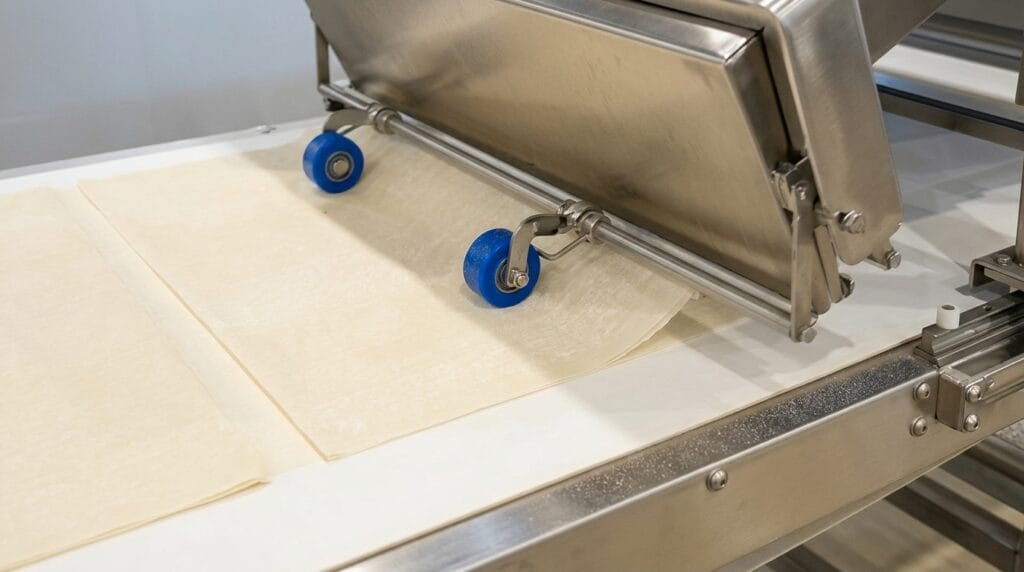
Given the delicate nature of the material, which might be as thin as 0.1 mm, these lines may use specific technologies to mimic the traditional hand-stretching process without tearing the sheets.
The technology generally falls into two categories, which are stretching-based lines and extruder-based lines. Both methods aim to achieve extreme thinness without compromising the integrity of the gluten network.
Precision in Automated Phyllo Dough Production: The Manufacturing Process
The journey from flour to a microscopically thin sheet typically follows a highly controlled sequence.
- Mixing and Resting: The process might begin with specialized mixers combining high-protein flour, water, salt, and oil. The dough should then be portioned and allowed to rest. This resting phase could be essential to relax the gluten network, which might otherwise snap back or rupture during stretching.
- Stress-Free Lamination: Instead of aggressive rolling, modern lines may use a stress-free lamination philosophy. An automated stretcher could transform the dough into a continuous ribbon. Some systems might even utilize a continuous upward air current beneath the dough belt to create a massive air bubble. The height of this bubble could tell operators if the dough has reached the perfect, paper-thin consistency.
- Surface Drying: On a high-speed line, the continuous sheet may pass under infrared lamps or through drying drums. This step should rapidly dry the surface to prevent the layers from fusing together without actually baking the dough.
- Oiling and Stacking: Precision nozzles may mist the dough with oil or dust it with cornstarch. Rotary blades or laser-guided cutters could then trim the continuous sheet into standard rectangles, stacking them rapidly for the next phase.
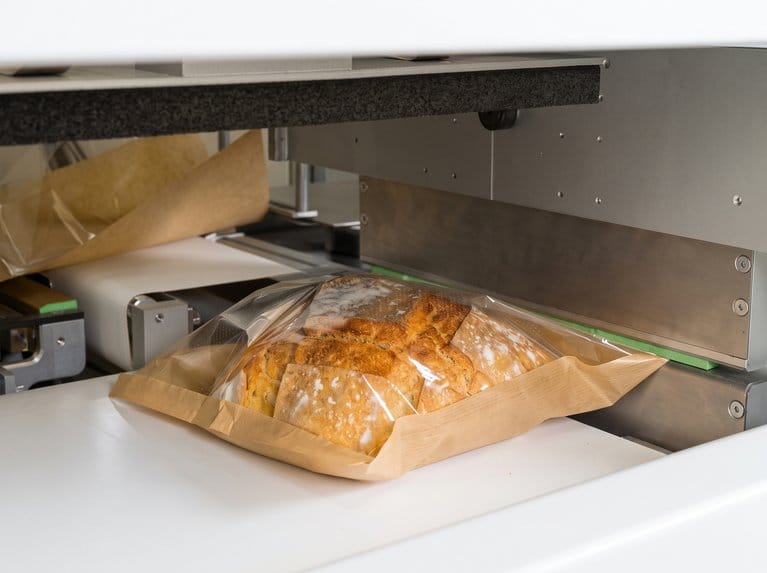
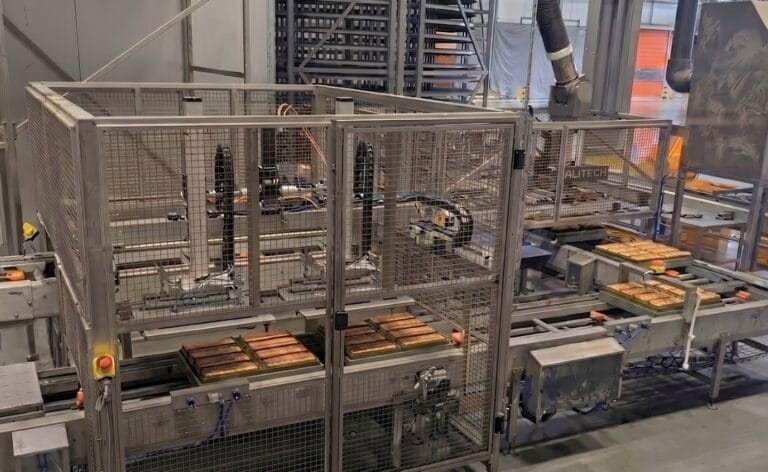
- Robotic Packaging: Packaging such a delicate product can be incredibly tricky. Bakeries might deploy highly dynamic six-axis robotic arms, equipped with specialized shovel or vacuum grippers, to gently pick up the stacked sheets and place them into cartons.
Components of an Automated Line
An automated phyllo line is typically a massive installation, often 13 to 28 meters long, consisting of several critical modules.
- Dough Band Former: This unit may feed a continuous, calibrated ribbon of dough into the system to ensure a steady workflow.
- For further reading on dough architecture and structural integrity, check our guide on Improving Cellular Architecture in Bakery Production.
- Stretching Section: This module could use a series of belts and rollers at increasing speeds to gradually thin the dough without creating tension.
- Tunnel Oven or Dryer: This component might briefly flash the dough to remove surface moisture, which could prevent sticking during the stacking phase.
- Oiling System: This system could spray a fine mist of oil using precision nozzles to separate the individual layers.
- Cutting and Stacking: This section may use rotary or guillotine blades to cut sheets to size before automatic counting and stacking occurs.
Core Challenges
While the automated ballet is impressive, operators and engineers may run into several significant hurdles.
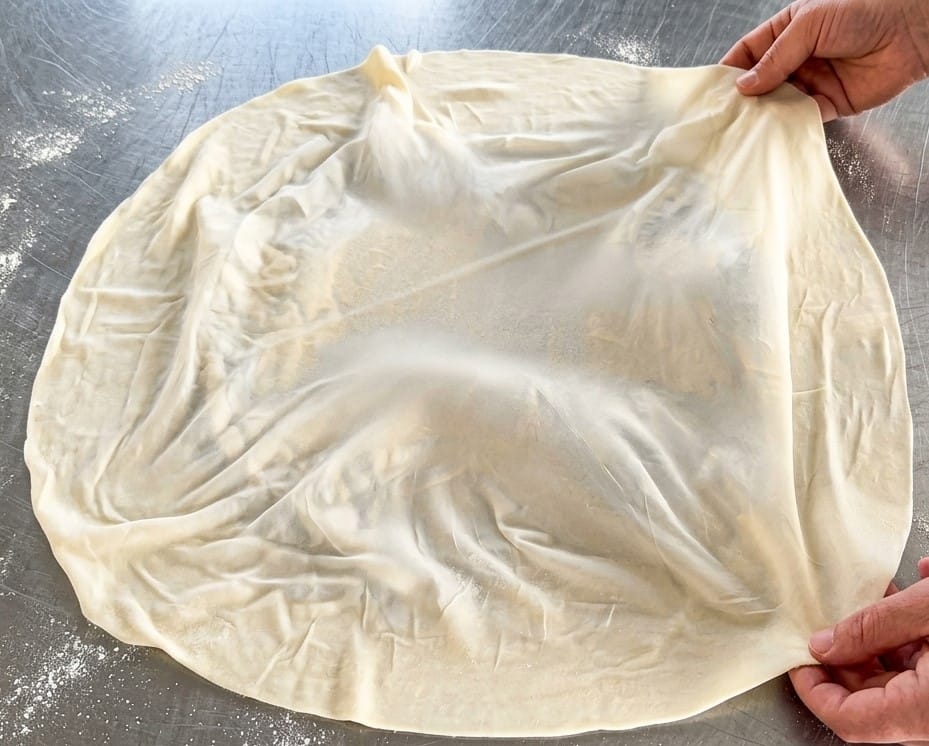
- Rheological Fragility: Dough could be considered a living material. If mechanical stretchers pull too aggressively, the gluten strands might rupture, leading to tears. Maintaining a stress-free environment across a long line could require perfectly synchronized belt speeds.
- The Moisture Balancing Act: If the infrared drying step is too intense, the edges of the phyllo might become brittle and shatter. If it is too weak, the 15 to 30 stacked sheets could turn into a single, unusable block of dough.
- Complex Robotic Vision: Because dough pieces may vary in height and position as they move down the belt, cutting them precisely could require advanced 3D vision systems. Laser triangulation sensors might be needed to map the contour of the dough in real-time.
- Micro-Downtimes: In highly synchronized lines, a minor sensor fault or a small dough jam could cause what engineers call micro-downtimes. While these might only last a few minutes, they could severely impact the Overall Equipment Effectiveness (OEE) and compromise the tension of the dough web.
😊 Thanks for reading!
Sources:
- Gatzelakis Fyllo Baklava machine by Adaxion photographics – YouTube
- https://gatzelakis.com/en/
- https://caputoflour.com/blogs/recipes/homemade-phyllo-dough
- https://lomfiller.com/pastry-manufacturing/
- https://www.youtube.com/watch?v=cLUYm8-4uqs
- https://www.youtube.com/shorts/NR8R2Rg2xE0
- https://www.staubli.com/global/en/robotics/industries/food/bread-and-baked-goods/automated-packaging-of-strudel-dough.html
- https://www.aku.eu/en/case-studies/automated-cutting-solution-for-dough-pieces-in-baked-goods-production
For further reading on key industry advancements, see our featured guides: How small changes in furniture can save you money and reduce production times, Redox Agents and Their Role in Dough Development, and How Ingredients Influence Water Levels in Biscuit and Cookie Doughs.