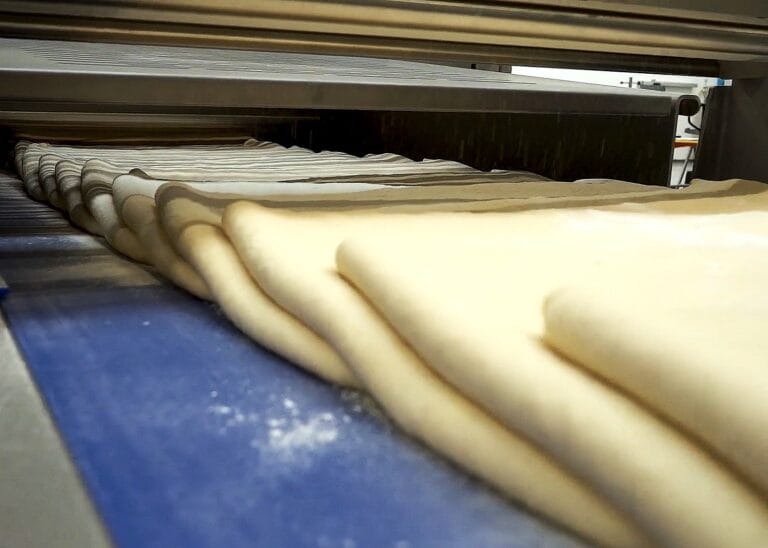
Improving Cellular Architecture: Why Your Dough Rolling Process Defines the Final Crumb
Tired of finding unpredictable holes in your sandwich bread or a crumb that collapses when sliced? These structural failures usually originate from poor molding. The combination of precise curling tension and cross-panning allows for a white, uniform, and resilient crumb.
The molding process represents a turning point in industrial baking. At this stage, the dough not only acquires its final shape, but the architecture of its cellular network is defined. Understanding the mechanics behind curling and the “four-piece” technique could be the key to elevating the quality of the final product.
The formation of the internal structure through Curling
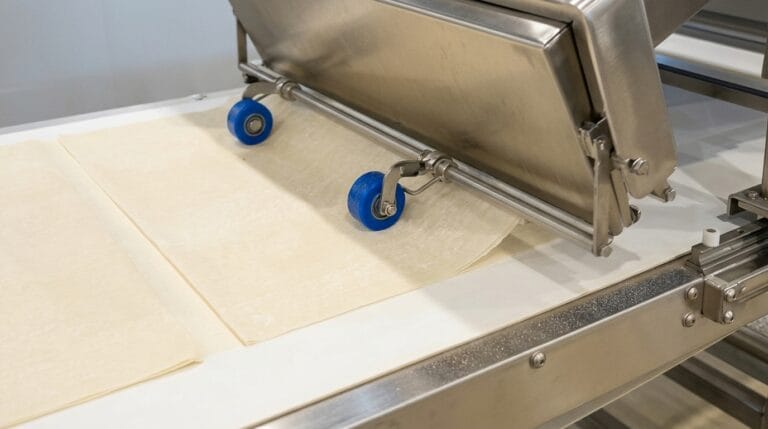
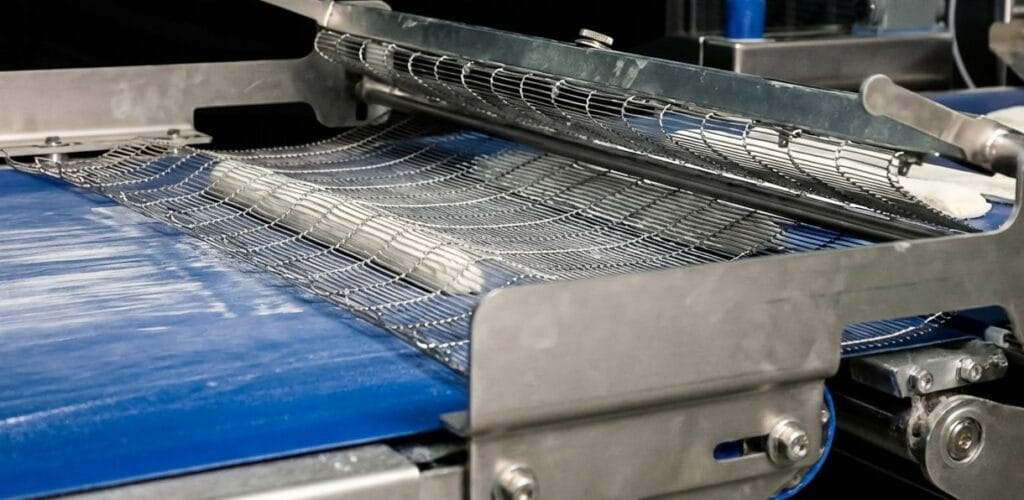
Curling is the step where the dough sheet, after being stretched by the rollers, is transformed into a cylinder. A heavy metal mesh or curling chain exerts friction on the leading edge of the dough, forcing it to roll onto itself.
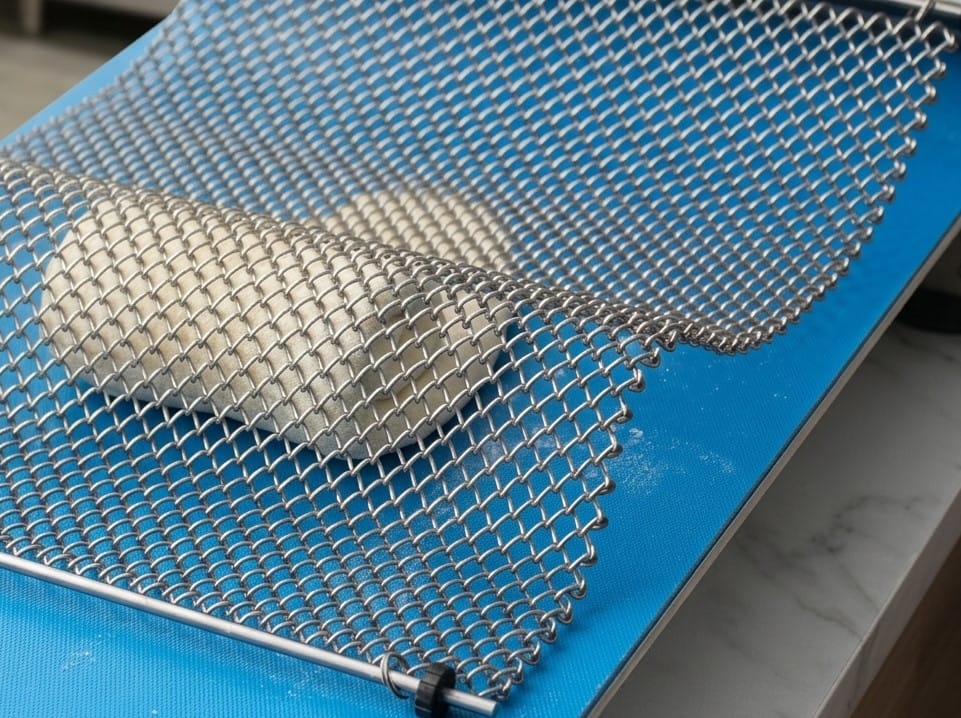
Precision in the tension of this mesh is crucial for several reasons:
- It helps expel excess gas trapped on the surface of the sheet, which should prevent the formation of air pockets or “tunnels” between the layers of the spiral.
- Proper tension ensures intimate contact between the dough surfaces, allowing the layers to seal effectively before going under the pressure board.
- The structural strength gained in this step defines the dough’s ability to withstand vigorous and uniform expansion during baking.
The multi-piece molding technique or Cross-Panning
This method consists of a four-piece molding. The dough cylinder is cut into four equal portions that are rotated 90 degrees before being placed in the pan. This physical reorientation alters the direction of gluten expansion and offers significant optical and mechanical advantages.
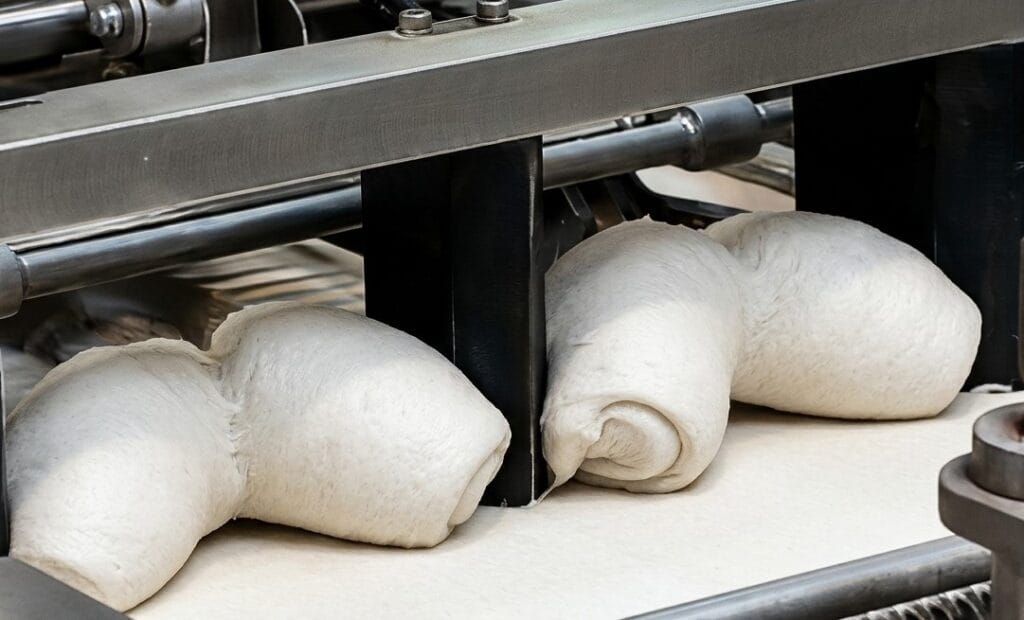
By implementing this technique, the following benefits can be observed:
- Crumb whiteness: during sheeting, the gas cells elongate in the direction of movement. In a single-piece loaf, slicing cuts these cells across their short axis, which can cast internal shadows and give a grayish appearance. By rotating the pieces, the cut is made along the long axis of the cell, reducing shadows and achieving a visually whiter and brighter crumb.
- Resistance to “Cupping”: the vertical orientation of the cells reinforces the side walls of the bread. This could give the loaf the necessary strength to resist lateral caving, a common problem when bread is sliced on high-speed lines.
- Texture and Resilience: the result is usually a much finer and softer crumb to the touch, with an elasticity that facilitates a clean and uniform slice.
😊 Thanks for reading!
Sources:
Cauvain, S. P., & Young, L. S. (2007). Technology of Breadmaking. Springer Science & Business Media.
Cauvain, S. P. (2012). Baking Problems Solved. Woodhead Publishing.
Scanlon, M. G., & Zghal, M. C. (2001).
Bread properties and crumb structure. Food Research International, 34(10), 841-864.