Gluten Relaxation in the Oven: The Power of Thermophilic Proteases
Standard enzymes fail as ovens heat up, leading to limited bread volume. New Taq1 proteases activate only at high temperatures, allowing for perfect gluten relaxation during expansion; this replaces chemical additives while maximizing the “short bite” texture in industrial production.
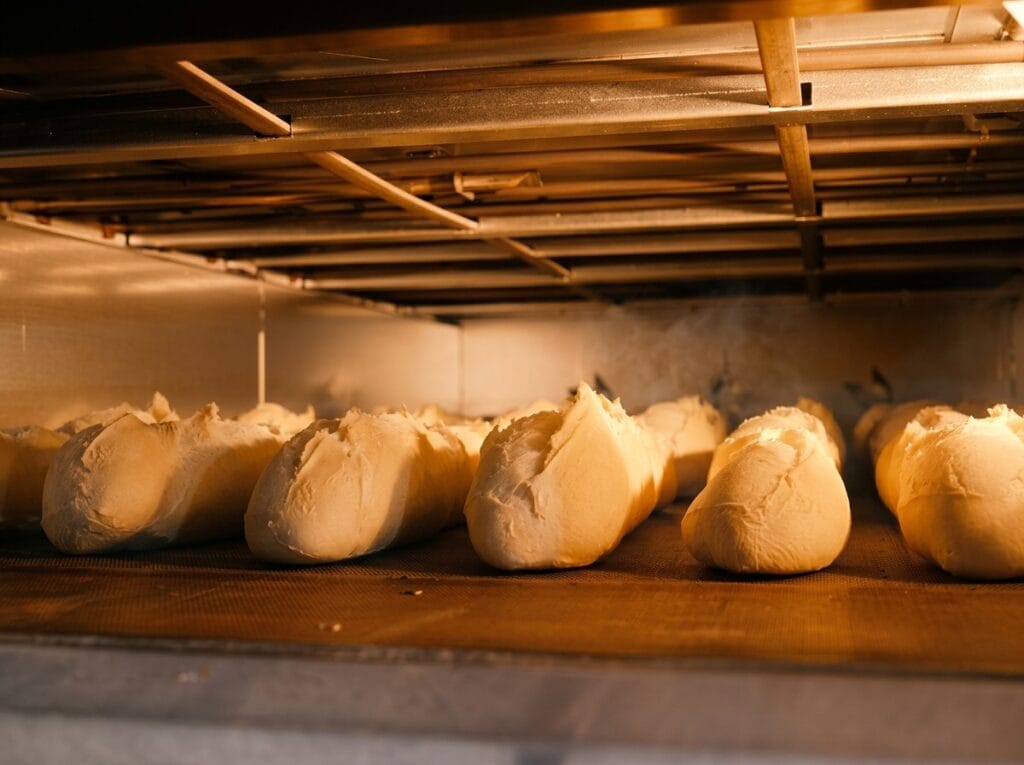
The industrial bakery sector is moving toward using extremophilic enzymes to manage dough structure. While traditional enzymes often stop working during the “oven spring” phase, new combinations might solve the structural problems found on high-speed production lines.
The main technical problem in baking is the timing of gluten relaxation. Standard fungal proteases work best during fermentation; however, they usually break down at temperatures between 40°C and 50°C. This early inactivation means that when the dough enters a hot oven, the gluten network is already too stiff to allow for maximum expansion.
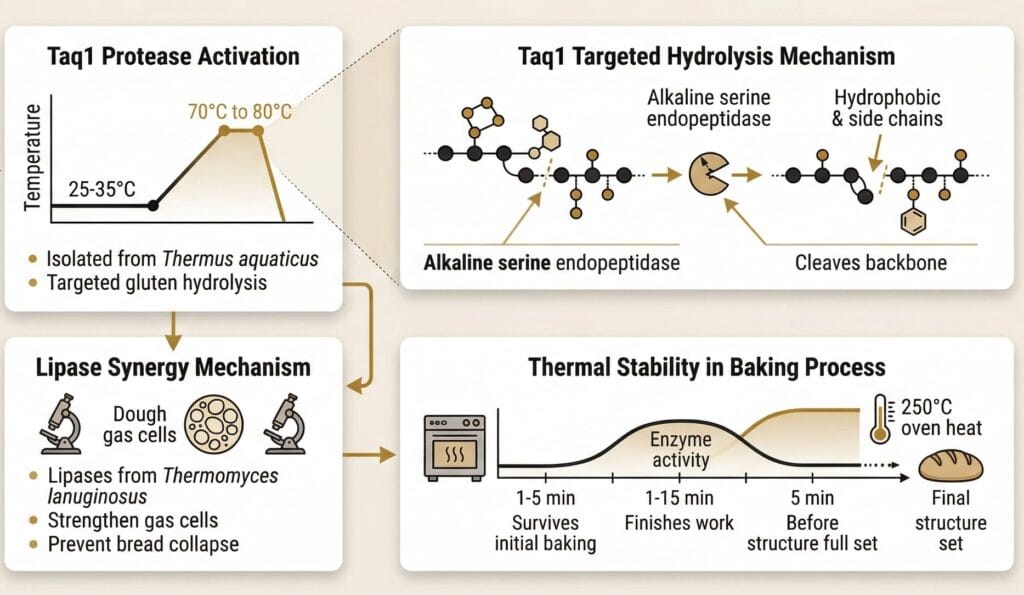
The use of Taq1 protease, which comes from the bacteria Thermus aquaticus, solves this timing issue. This enzyme stays inactive at room temperature, so it does not weaken the dough during proofing. Instead, it activates only when the dough heats up in the oven, potentially allowing the gluten to relax exactly when the starch begins to set.
Technical Mechanisms and Engineering Parameters
The success of this system depends on specific temperature ranges and the synergy between different enzymes. The following points explain the engineering behind this process:
Direct Impact on the Production Line
Using this thermophilic enzyme system could provide several benefits for large-scale bakeries. By moving the enzyme activity to the baking stage, factories may reduce the need for chemical agents like L-cysteine or sodium metabisulfite; this supports a “clean label” approach without losing volume.
The most important result is the improvement of the “short bite” in soft breads and buns. Because the gluten is relaxed more effectively at the right moment, the final bread could have a softer texture and a better mouthfeel. This improvement might lead to better reviews from customers for packaged goods.
Production efficiency should also improve. The better expansion of the dough might allow for using less dough weight per loaf while keeping the same size; this could save money on raw materials during large runs. Additionally, the stronger gas retention might decrease the number of collapsed loaves on the cooling line, directly increasing total output.
Sources:
- Puratos NV (Patent EP3481205B1): https://patents.google.com/patent/EP3481205A1/nl
- Technical specifications on Thermus aquaticus (Taq1) proteolytic activity.
- Thermomyces lanuginosus lipase application notes in fungal expression systems.