From Pneumatics to Electromagnets: Cutting Pan Handling Costs in Industrial Bakeries
How fully electric pan stacking and unstacking technology is reducing operational costs, extending equipment life, and improving line reliability.

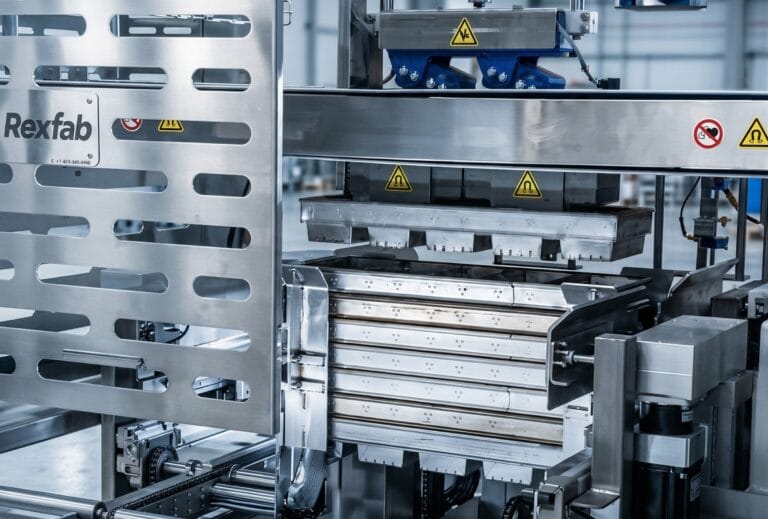
How fully electric pan stacking and unstacking technology is reducing operational costs, extending equipment life, and improving line reliability.
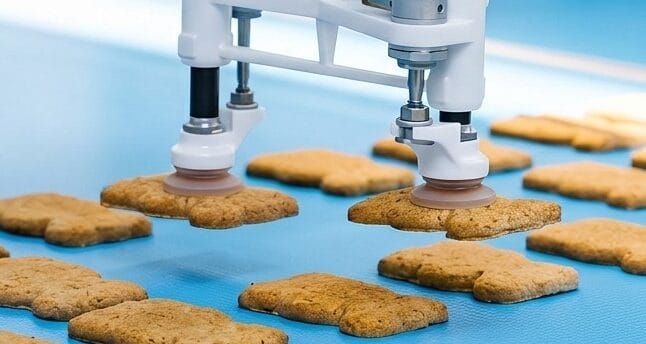
Fragile cookies break easily on high-speed lines, causing costly waste and operational frustration. This constant loss hits profitability without warning. Implementing gentle handling systems might be the key to protecting every unit without sacrificing industrial throughput.
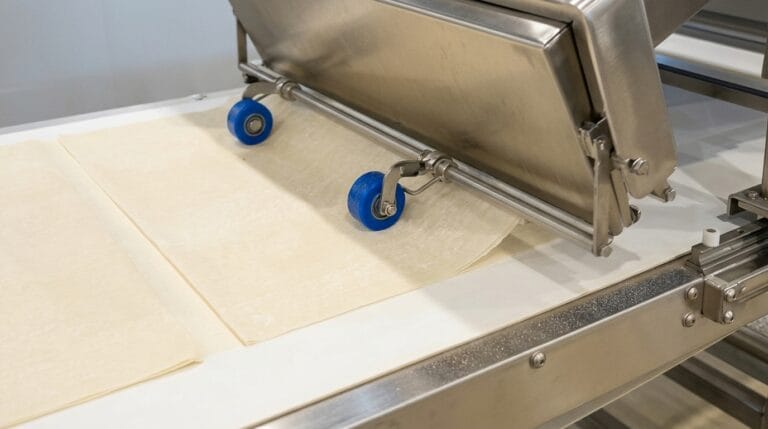
Scaling delicate phyllo production often feels like a high-stakes gamble. Fragile sheets might tear easily under mechanical pressure, which could lead to significant waste. Modern automated lines may provide the precision needed. These systems could replicate artisan techniques while maintaining high-speed industrial output.
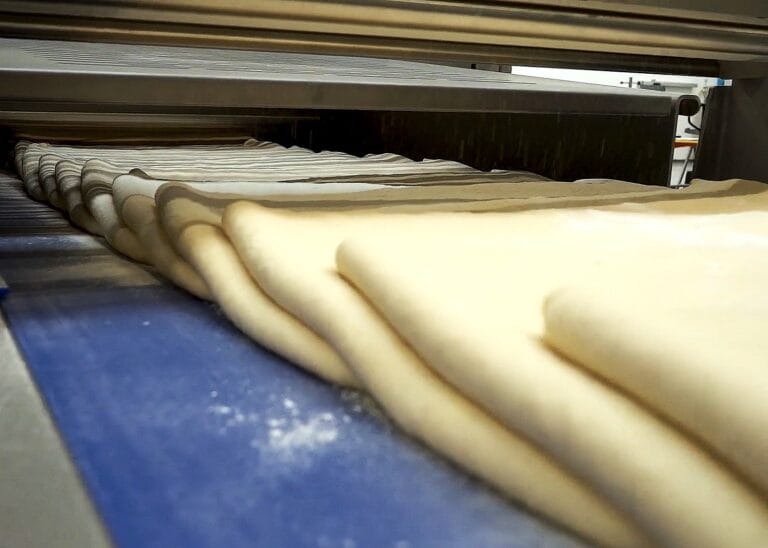
Manual block preparation might create frustrating bottlenecks and yield uneven pastries. Automating your layering process could offer the precise, continuous workflow your facility might need to eliminate delays and enhance overall quality.

Cleaning thousands of baking trays manually might drain labor and slow down production. Flour dust and heavy chemical use could create hazardous work environments. An automated, dry cleaning and oiling system might just be the upgrade your high volume bakery needs.
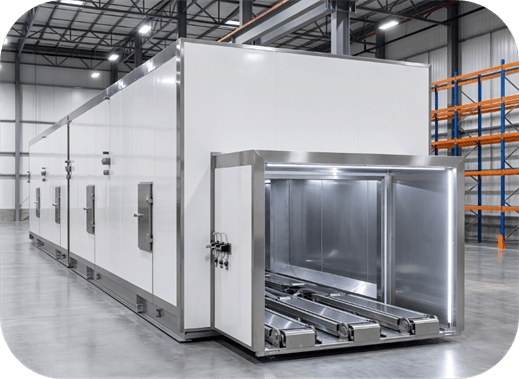
Struggling with flattened dough and blistered crusts after thawing? Slow freezing often destroys delicate gluten networks and devastates yeast viability. Upgrading to rapid blast or spiral freezing methods might just save your pastry structure and streamline your production line.
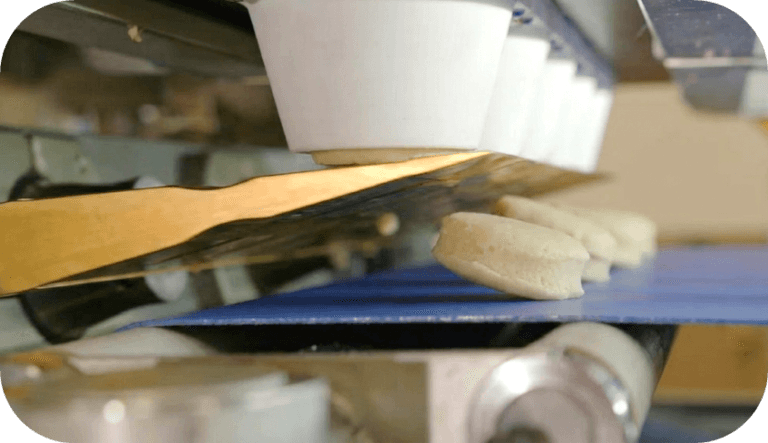
Dough forming often limits bakery production speed and versatility. When switching from standard cookies to filled bars, old equipment forces costly downtime and fails on consistency. Upgrading to a versatile, high-speed wirecut system could resolve these bottlenecks and elevate yields.
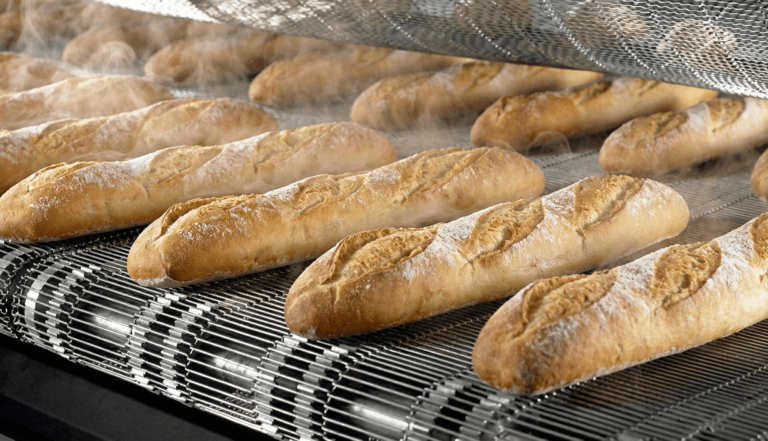
From empirical guesswork to intelligent control why hygrometry is the next frontier in large-scale bread production.
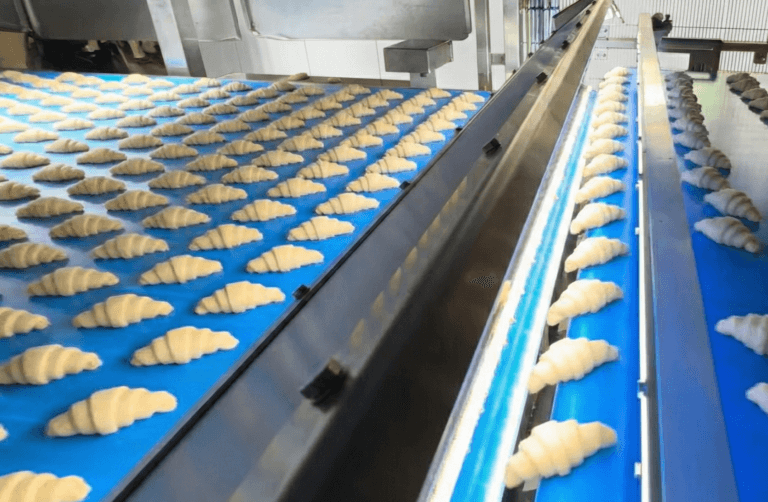
Traditional quality checks often rely on subjective touch or slow lab tests. Photonic technology could offer a fix. It provides a chemical vision that might see inside your dough instantaneously, acting like a lab report for every loaf.
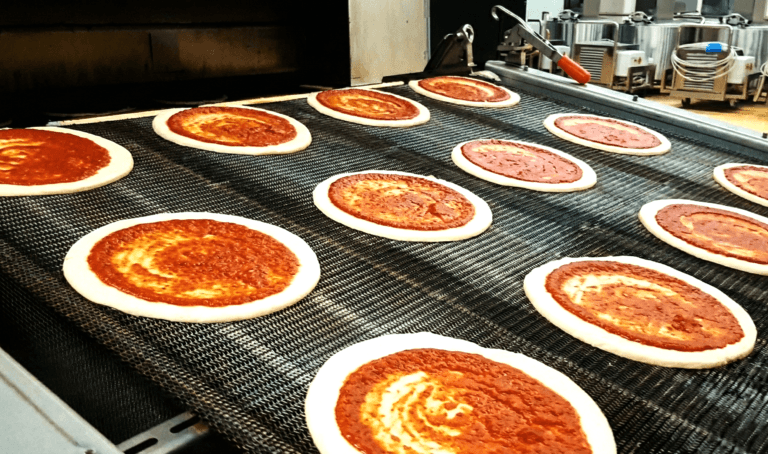
Struggling with dough shrinkage or excessive scrap in high-speed pizza lines creates significant efficiency bottlenecks. Rather than relying solely on traditional sheeting, utilizing a combination of mechanical rounding and thermal pressing could offer a streamlined solution for consistent, high-quality crusts without the waste associated with rework.